



Strategic Furniture Quality Control: The Definitive Guide to Your China QC Check
 Tag
TagExample Category
 Date
Date25/08/2026
 Reading Time
11 min read

For leaders and importers in the wholesale furniture industry, the most significant financial risk is not market fluctuation or shipping costs; it is the catastrophic scenario of a 40-foot container arriving with systemic, unsellable defects. The Cost of Poor Quality (COPQ)—a metric that smart businesses obsess over—encompasses not just the lost value of goods but also freight ($4,000+), customs ($2,500+), disposal fees, replacement costs, and irreparable brand damage. A single failed shipment, representing a $50,000 investment, can easily incur over $60,000 in total losses, erasing the entire profit margin of a product line. In this high-stakes environment, furniture quality control (QC) is not an operational expense to be minimized. It is the single most critical investment a business can make to protect its capital and ensure its long-term viability.
This guide provides a comprehensive strategic framework for implementing a world-class China furniture QC check for your supply chain. We will move beyond a simple checklist to dissect the methodology, standards, and strategic thinking behind a professional QC process. We will explore the three-stage inspection framework, the technical anatomy of a furniture inspection, and the critical role of an impartial third-party partner in mitigating risk. The objective is to arm you with the intelligence needed to transform quality control from a reactive measure into a proactive, value-driving asset.

The Strategic & Statistical Foundation of Modern QC for Wholesale Furniture
The traditional view of QC is a simple pass/fail test at the end of a production run. This is a flawed and dangerous oversimplification. A modern, strategic approach views furniture quality control as a continuous process integrated throughout the manufacturing lifecycle, designed to prevent defects rather than just identify them. The foundation of this system is the internationally recognized AQL standard.
A Deep Dive into AQL (Acceptance Quality Limit)
AQL is a statistical method, defined by standards like ISO 2859-1, used for product inspections. Instead of inspecting 100% of the units (which is often impractical and cost-prohibitive), a random sample of a specific size is pulled from the production lot. These samples are then inspected, and the number of defects found is compared to a predetermined limit.
In a furniture quality control context, defects are typically categorized:
- Critical Defects (AQL 0): Unacceptable flaws that could cause harm to the user (e.g., a chair that is structurally unstable, presence of lead paint, sharp edges). A single critical defect typically results in the failure of the entire inspection lot.
- Major Defects (AQL 2.5): Flaws that would likely result in the product being returned by the consumer (e.g., a deep scratch on a tabletop, incorrect dimensions, a significant color mismatch). The 2.5 indicates that a batch is considered acceptable if 2.5% or fewer items in the sample are defective.
- Minor Defects (AQL 4.0): Small imperfections that most users would not notice or that do not affect the product’s function (e.g., a tiny blemish on an unseen part).
Strategic Insight: Your choice of AQL is a direct communication of your brand’s quality standard to your supplier. While AQL 2.5/4.0 is a common industry standard, a premium brand might specify a tighter AQL of 1.5 for Major defects and 2.5 for Minor defects. This decision increases the likelihood of a batch being rejected and signals to the factory that a higher level of care is required, often leading to better overall production quality. It transforms the AQL from a mere technical spec into a tool for brand positioning.
The Three-Stage Inspection Framework & Its ROI
A comprehensive furniture quality control strategy is not a single event, but a series of checkpoints designed to mitigate risk at every stage of production. Each stage has a clear Return on Investment (ROI).
Stage 1: Pre-Production Inspection (PPI)
A PPI is conducted before mass production begins to verify that the raw materials and components meet the specified quality standards. It is your first and most effective line of defense against systemic, widespread defects.
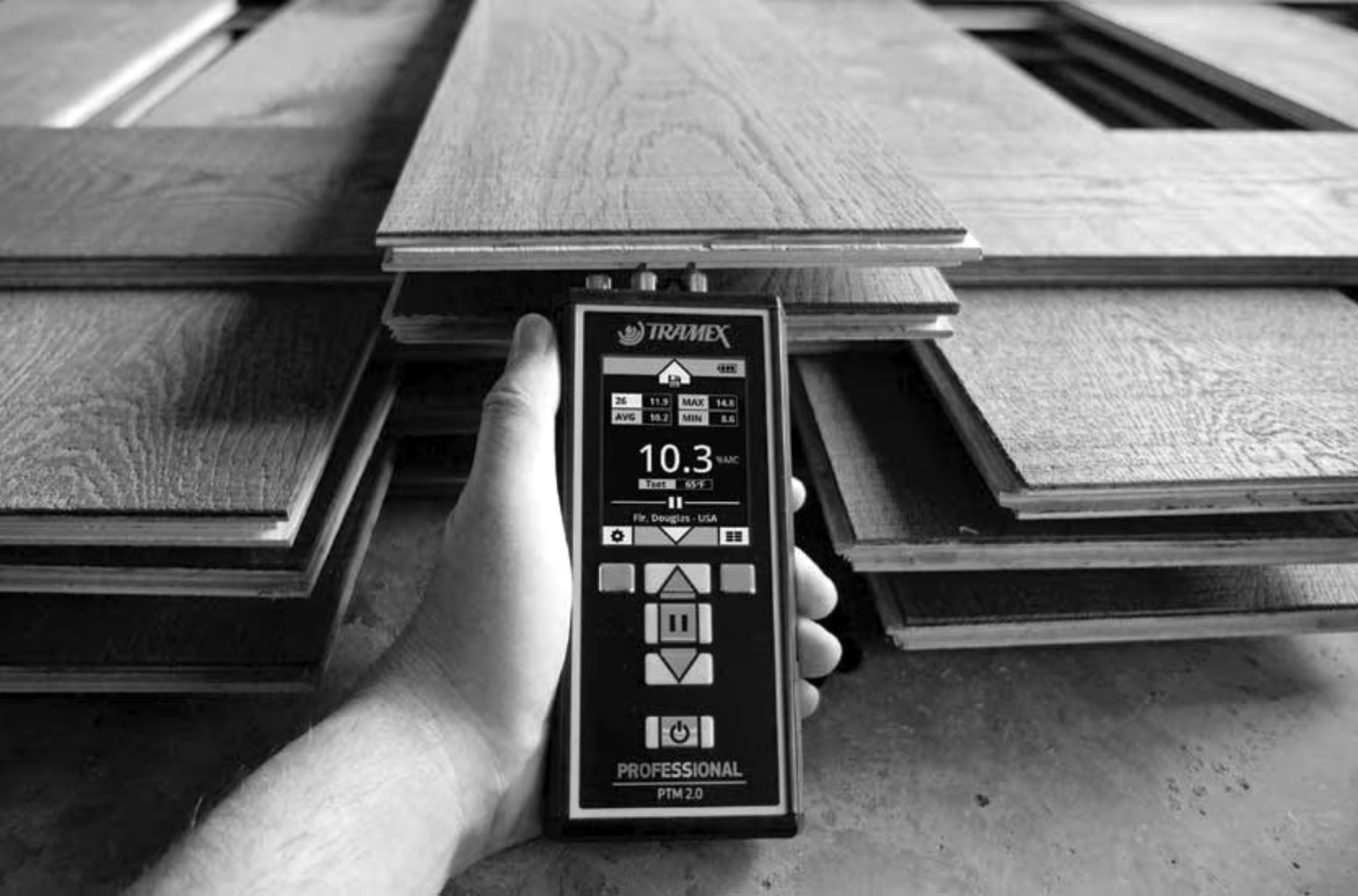
- What’s Checked: Wood moisture content (must be 6-8% for North American climates), steel gauge and pre-treatment for powder-coating, foam density (kg/m³), fabric grammage (GSM), and a check of the factory’s production readiness.
- Strategic ROI: A $300 investment in a PPI can prevent a catastrophic $30,000 mistake. Catching a batch of improperly dried wood at this stage saves the entire production run from being manufactured with a fatal flaw that guarantees warping and cracking. The ROI in this scenario is nearly 100:1. It is the highest-leverage activity in the entire QC process.
Stage 2: During Production Inspection (DPI or DUPRO)
A DPI is conducted when 10-20% of the production run is complete. Its purpose is to check the first units coming off the assembly line against the approved “Golden Sample” and technical specifications.
- What’s Checked: Assembly processes, jig accuracy, welding quality, consistency of finishing, and initial packaging. The inspector ensures that the factory’s process is capable of meeting the standard at scale.
- Strategic ROI: A DPI acts as an early warning system. It allows for the correction of process-related issues before they are replicated across thousands of units. Correcting a misaligned welding jig after 50 units costs a few hundred dollars in rework; discovering it after 5,000 units have been produced costs tens of thousands and can cause project-killing delays.
Stage 3: Pre-Shipment Inspection (PSI)
This is the final and most common type of inspection. A PSI is performed once 100% of the order is produced and at least 80% is packaged. This is the final gatekeeper that determines if your capital investment is sound.
- What’s Checked: A full AQL inspection covering structural integrity, aesthetics, dimensions, function, and packaging.
- Strategic ROI: A passed PSI provides the objective, third-party documentation needed to confidently release the final 70% payment to the supplier. If the inspection fails, it gives you the undeniable leverage to demand rework before the products leave the factory, saving you from a disastrous situation upon arrival. It shifts the negotiation power firmly to your side at the most critical moment.
The Technical Execution of a World-Class Inspection
What does an inspector actually look for during a PSI? It is a meticulous, multi-faceted process using specialized tools to generate objective data.
The Inspector’s Toolkit: Beyond the Tape Measure
A professional inspector arrives with a case of specialized tools to remove subjectivity from the process.
- Digital Moisture Meter: Provides a precise percentage reading for wood and rattan.
- Digital Calipers: Measures thickness and dimensions to a fraction of a millimeter.
- Pantone Color Swatches: The global standard for ensuring objective color matching against specifications.
- Cross-Hatch Adhesion Tester: A specialized tool that scores a finish and uses calibrated tape to test its durability.
- Barcode Scanner: Verifies that EAN/UPC codes are correct and scannable, preventing costly retail compliance failures.
The Anatomy of the Inspection
- Structural Integrity & Safety Tests: Stability tests on a level granite surface, static load tests (e.g., placing 135kg / 300lbs on a chair seat for a set period), and dynamic stress tests on all joints.
- Workmanship & Finish Quality: A meticulous cosmetic inspection under controlled lighting for scratches, dents, and color consistency. The cross-hatch test for finish adhesion is a non-negotiable step.
- Dimensional & Functional Verification: Using calipers and measuring tapes to check against technical drawings with specified tolerances (e.g., +/- 2mm). For KD furniture, a full assembly test is mandatory.
- Packaging & Labeling Verification: Verifying carton thickness (ECT or Burst Strength), drop test survival, and accurate shipping marks to prevent customs nightmares.
Beyond the Report: Building a Data-Driven QC System
A single inspection report is a snapshot in time. A true leader uses the data from all reports to build a long-term, strategic quality management system.
Developing Supplier Scorecards
The data from every inspection should be logged. Over time, this allows you to create a “Supplier Scorecard” for each factory partner. Key metrics to track include:
- Final Inspection Pass/Fail Rate
- Average Number of Major/Minor Defects per Inspection
- Most Common Types of Defects
- On-Time Shipment Rate
This objective data allows you to rank your suppliers based on real-world performance. It provides concrete evidence for negotiating better terms with top performers and provides a clear rationale for phasing out underperformers.
Driving Continuous Improvement
Share this data with your suppliers. A good partner will appreciate the feedback and use it to improve their processes. By analyzing the most common defect types, you can work collaboratively with the factory to address the root cause, whether it’s a training issue, a tooling problem, or a raw material inconsistency. This transforms your relationship from a simple transactional one into a strategic partnership focused on mutual improvement. This data-driven approach is the hallmark of a sophisticated, modern supply chain.
Frequently Asked Questions (FAQ)
- What is the most critical stage of furniture quality control?
While all stages are important, the Pre-Production Inspection (PPI) offers the highest ROI. By ensuring the quality of raw materials before they are used, you prevent the most costly and widespread types of defects from ever occurring.
- How much does a professional QC inspection in China cost?
A typical Pre-Shipment Inspection from a reputable third-party agency usually costs between $300 and $500 per inspector-day. Considering it protects a shipment often valued at $30,000-$50,000, the ROI is immense.
- Can I just rely on the factory’s own internal furniture quality control report?
Relying solely on the factory’s QC is a significant risk. The factory’s QC team works for the factory, creating an inherent conflict of interest. An independent, third-party inspection provides an impartial, objective assessment that is aligned only with your quality standards and interests.
- What happens if an inspection fails?
If a PSI fails, you have leverage. You can refuse to accept the shipment until the factory has corrected the defects. Typically, this involves the factory sorting through the entire production lot to remove or rework the defective items, after which a re-inspection is conducted (usually at the factory’s expense).
Read More from Our Advanced Wholesale Furniture Optimization & Solutions Guides
Your Eyes and Ears on the Factory Floor
Executing a multi-stage furniture quality control strategy from thousands of miles away is a formidable challenge. At ChinaSourcing.co, we act as your dedicated, on-the-ground quality assurance team. We don’t just find suppliers; we manage them. Our experienced inspectors implement this rigorous QC framework, providing you with detailed, unbiased reports and the actionable intelligence needed to make informed decisions. We transform the uncertainty of remote manufacturing into a transparent, controlled, and predictable process.
Ready to protect your investment and guarantee the quality of your next shipment?
Contact Our Sourcing Experts for a Free Consultation Today!
Please subscribe to see the detail
Free Resources Right Here
Enter your email to gain full access to our resources
Get exclusive access from expert insights to streamline your supply chain.
Free Resources
Explore More Relative Resources

Example Category
China's March PMI Reaches 50.4 Amid Middle East Conflict Pressures
Stronger Demand Drives China's Manufacturing PMI to 50.4 China's factory activity experienced its highest growth in a year during March, buoyed by st...

28/07/2026

4 min read
![Furniture Wholesale Suppliers: The Ultimate Framework to Vet Top Manufacturers in China [2025]](https://chinasourcing.co/wp-content/uploads/2025/10/10-point-framework-vetting-furniture-wholesale-suppliers.png)
Example Category
Furniture Wholesale Suppliers: The Ultimate Framework to Vet Top Manufacturers in China [2025]
For leaders in the furniture wholesale suppliers industry, a polished Alibaba profile or impressive product brochure are vanity metrics. The true me...
17/06/2026
8 min read

Example Category
The 2026 consumer goods pivot: Why your China strategy needs an upgrade
We have entered a new era for consumer goods in China. The latest "Horizon Scanning" reports for 2026 confirm that the market has moved beyond simpl...
19/03/2026
3 min read
Contact Us Right Today
Ready to work with a sourcing team that’s built for real-world results?
From first quote to final delivery, China Sourcing Co helps you simplify sourcing, reduce risks, and scale with confidence.