

0%

China Wholesale Furniture Shipping: A Strategic Analysis of Sea Freight vs. Truck

tag Tag
Example Category
calendar Date
08/03/2026
clock Reading Time
9 min read
China Wholesale Furniture Shipping: A Strategic Analysis of Sea Freight vs. Truck

For leaders managing a wholesale furniture supply chain, the selection of a shipping method is one of the most critical decisions impacting landed cost, lead time, and operational risk. It is not merely an operational task to be delegated, but a strategic choice with profound financial consequences. The primary modes for moving goods out of China—ocean-going sea freight and cross-border trucking—offer fundamentally different value propositions. Choosing the wrong one can lead to project-killing delays or an erosion of profit margins, while the right choice can create a significant competitive advantage.

This guide provides a strategic, data-driven analysis of the sea freight vs. truck debate, while also introducing the increasingly viable third option: rail freight. We will move beyond a surface-level comparison to dissect the financial, logistical, and risk-related implications of each mode. The objective is to provide a clear decision-making framework, enabling you to architect a shipping strategy that is perfectly aligned with your business’s specific needs, whether they are cost optimization for a large U.S. distributor or speed-to-market for a hotel project in Southeast Asia.

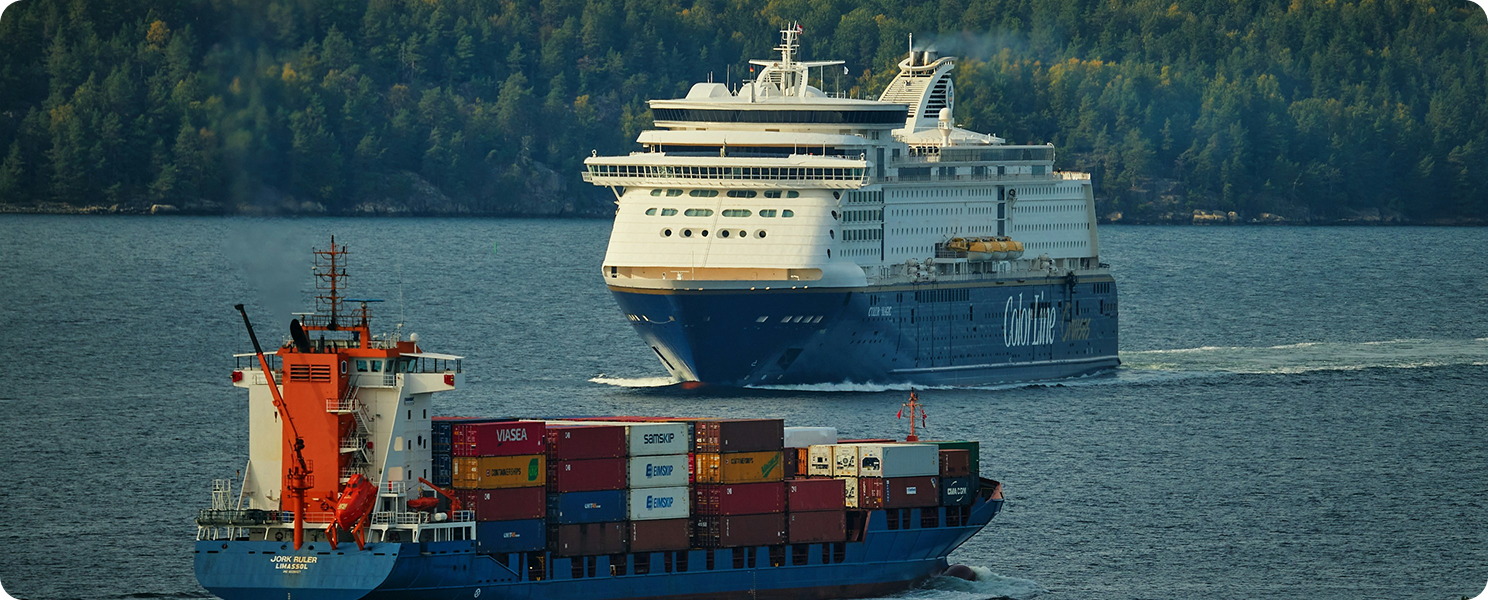
A strategic comparison of sea freight vs. truck for shipping furniture from China.

A Deep Dive into Sea Freight: The Global Standard for Wholesale Furniture Scale

Sea freight is the undeniable backbone of global trade and the default method for shipping furniture from China to intercontinental markets (North America, Europe, Australia, etc.). Its power lies in its immense scale and unparalleled cost-effectiveness for large volumes. The primary strategic decision within sea freight is between Full Container Load (FCL) and Less than Container Load (LCL).
  • FCL (Full Container Load): You lease an entire container (typically 40ft or 40ft High Cube). This is the gold standard for security and cost-efficiency for any shipment over approximately 15 cubic meters (CBM). Your goods are loaded and sealed at the factory, reducing handling and damage risk.
  • LCL (Less than Container Load): Your goods are consolidated with others in a shared container. While flexible for small volumes, it involves more handling at consolidation warehouses, which increases the risk of damage and delays.

The Strategic Advantages of Sea Freight

The primary reason over 90% of international freight moves by sea is its economic efficiency. For a trans-pacific shipment from Shanghai to Los Angeles, a 40ft container might cost $4,000. With a capacity of about 76 CBM, this translates to an incredibly low cost of ~$53 per CBM. No other mode of transport can come close to this efficiency at scale. This allows wholesale furniture businesses to maintain competitive pricing in distant markets. Its global reach is absolute, capable of connecting Chinese factories to virtually any major port in the world.

The Inherent Risks and Disadvantages

The trade-off for this cost-efficiency is time. The ocean transit alone can take 30-45 days to Europe or the US East Coast, and when factoring in port congestion, customs clearance, and inland transport, the total door-to-door lead time can easily stretch to 60-90 days. This long cash cycle is a significant financial consideration. Moreover, the industry is subject to high volatility. Ocean freight rates, as tracked by indices like the Drewry World Container Index, can fluctuate dramatically, making long-term cost forecasting a challenge.

A Deep Dive into Cross-Border Trucking: The Regional Power Play

While sea freight dominates global routes, cross-border trucking has emerged as a powerful and strategic alternative for businesses located in countries bordering or near China, particularly within Southeast Asia’s Greater Mekong Subregion (e.g., Vietnam, Thailand, Laos). This mode involves dedicated trucks transporting goods directly from the factory in China to a destination in a neighboring country.

The Strategic Advantages of Cross-Border Trucking

The single greatest advantage of trucking is speed. A shipment that might take 20-30 days via a sea route (e.g., from Guangdong to Bangkok) can often be completed in 3-7 days by truck. This dramatic reduction in lead time is a game-changer for projects with tight deadlines or for businesses implementing a just-in-time inventory strategy. The door-to-door nature of trucking also reduces handling points compared to LCL sea freight, which can lower the risk of damage.

The Inherent Risks and Disadvantages

This speed comes at a significantly higher cost per cubic meter, often 30-50% more than the equivalent sea freight volume. The capacity of a truck is also far less than a 40ft container, making it unsuitable for massive stock orders. The viability of trucking is also entirely dependent on the quality of road infrastructure and the efficiency of specific border crossings, which can be prone to unpredictable delays.
Cross-border trucking, a key option when considering sea freight vs truck for shipping furniture from China.

The Third Way: The Rise of Rail Freight

A third, increasingly strategic option has emerged: rail freight, particularly the China-Europe Railway Express. This service offers a compelling hybrid solution, bridging the gap between the low cost of sea freight and the high speed of air freight. It is a powerful option for businesses shipping to Europe and Central Asia.
The train routes, part of the Belt and Road Initiative, connect major Chinese manufacturing hubs like Chengdu and Xi’an directly to European logistics hubs like Duisburg, Germany, and Warsaw, Poland. Transit times are typically 15-20 days, which is about half the time of sea freight. While more expensive than sea, it is significantly cheaper than air. This makes it an ideal choice for higher-value furniture or for replenishing stock more quickly than sea freight allows, without resorting to the prohibitive cost of air.

The Strategic Decision: A Data-Driven Comparison

The optimal choice is never absolute; it is always relative to the specific needs of the business. Here is a direct comparison based on key performance indicators:
An infographic showing factors for wholesale furniture shipping comparison.

Scenario Analysis

  • Scenario A: A large U.S. retailer ordering 10 containers of patio furniture.
    • Optimal Choice: Sea Freight (FCL).
    • Rationale: The distance and volume make the cost-efficiency of FCL the only logical choice.
  • Scenario B: A hotel developer in Vientiane, Laos, needing custom banquettes in 3 weeks.
    • Optimal Choice: Cross-Border Trucking.
    • Rationale: Speed is the absolute priority, making the higher cost a justifiable expense to meet the deadline.
  • Scenario C: A European e-commerce brand needing to replenish a best-selling line of office chairs faster than the sea freight lead time allows.
    • Optimal Choice: Rail Freight.
    • Rationale: Rail offers a balanced solution, getting the product to the EU market in half the time of sea freight at a manageable cost, protecting sales that would otherwise be lost while waiting for a sea shipment.
A business leader making a strategic decision between sea freight vs truck.

Frequently Asked Questions (FAQ)

  1. Is air freight ever a viable option for wholesale furniture?
For bulk wholesale furniture, almost never. The cost is typically 5-10 times higher than sea freight, making it commercially unviable for anything other than critical replacement parts or urgent samples.
  1. How does my choice of Incoterm (e.g., FOB, EXW) affect this decision?
By choosing FOB (Free On Board), you take control of the shipment. This empowers you to work with your own freight forwarder to conduct this analysis and choose the optimal mode based on your needs, rather than being locked into the supplier’s preferred method.
  1. Do I need different insurance for different shipping modes?
Yes. Cargo insurance policies are specific to the mode of transport. An “All-Risk” marine cargo policy for sea freight covers different perils (e.g., sinking, containers lost overboard) than a policy for road or rail transport.

Read More from Our Advanced Optimization & Solutions Guides

Architecting Your Optimal Shipping Strategy

The choice between sea freight vs. truck vs. rail is a microcosm of the complexities involved in shipping furniture from china. The right decision requires a deep understanding of not just costs and timelines, but of the strategic priorities of your business. At ChinaSourcing.co, we function as your strategic logistics partner. We don’t just book freight; we analyze your specific project needs to design and execute the most intelligent and cost-effective shipping solution. We transform a complex logistical challenge into a source of competitive advantage.
Ready to build a smarter, more resilient furniture supply chain?
Contact Our Sourcing Experts for a Free Consultation Today!

Please subscribe to see the detail

Free Resources Right Here

Enter your email to gain full access to our resources

Get exclusive access from expert insights to streamline your supply chain.

Free Resources

Explore More Relative Resources

Contact Us Right Today

Ready to work with a sourcing team that’s built for real-world results?

From first quote to final delivery, China Sourcing Co helps you simplify sourcing, reduce risks, and scale with confidence.

Index