



Incoterms for Furniture Imports: A Strategic Guide for Wholesale Furniture Distributors
 Tag
TagExample Category
 Date
Date09/07/2026
 Reading Time
10 min read

For leaders of large-scale wholesale furniture distribution businesses, the three-letter acronyms found on a purchase order – FOB, CIF, EXW – are far more than simple jargon. They are the fundamental legal and financial pillars upon which your entire international supply chain is built. The choice of Incoterm is not an administrative detail to be delegated; it is a critical strategic decision that dictates cost, defines risk, and determines who holds control over your multi-million dollar inventory as it moves across the globe. A misunderstanding of these terms is a direct exposure to significant financial loss and operational chaos.
This guide provides a strategic analysis of the most critical Incoterms for furniture imports. We will move beyond simple definitions to dissect the profound implications of each term for a professional distributor. We will analyze how your choice impacts your Total Landed Cost, your operational control, and your company’s risk profile. The objective is to provide a clear, data-driven framework for selecting the Incoterm that best protects your interests and transforms a potential point of vulnerability into a source of strategic control.

What Are Incoterms? A Strategic Overview
Published by the International Chamber of Commerce (ICC), Incoterms® are a set of globally recognized rules that define the responsibilities of sellers and buyers for the delivery of goods under sales contracts. Their primary function is to clarify one single, critical point: the exact moment when risk and responsibility transfer from your supplier to you.
Think of them as the “rules of engagement” for your shipment. They precisely define who is responsible for each stage of the logistics process:
- Transport and Insurance
- Export and Import Clearance
- Loading and Unloading
For a wholesale furniture distributor, mastering the strategic differences between the most common terms is not optional; it is essential for effective supply chain management.
A Deep Dive into the “Big Three” Incoterms for Furniture
While there are 11 official Incoterms, the vast majority of wholesale furniture trade is conducted under three core terms. We will analyze each from a strategic leadership perspective.
EXW (Ex Works): The Illusion of Ultimate Control
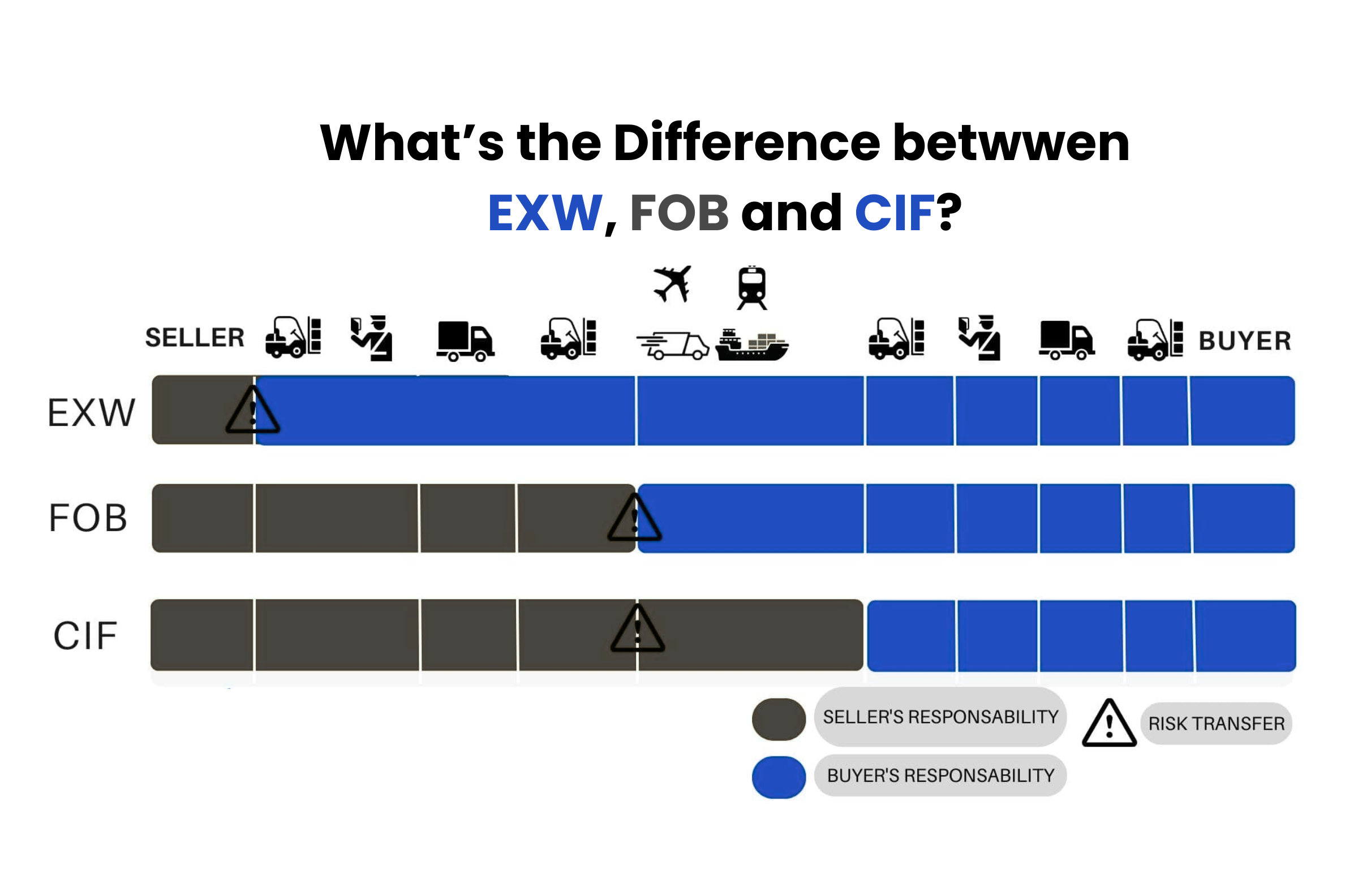
- What it is: Under EXW, the supplier’s only responsibility is to make the goods available at their own premises (the factory). You, the buyer, are responsible for everything else: loading the goods onto the truck, arranging inland transport to the port, handling export customs clearance in China, booking ocean freight, insurance, and all import procedures.
- Strategic Analysis: EXW often presents the lowest initial “unit price” from the factory, which can be seductive. It seems to offer ultimate control. However, for a Western-based distributor, this control is an illusion. It forces you to manage a series of complex, high-risk operations in a foreign country. You are now responsible for navigating Chinese customs, a process fraught with regulatory risk if you lack local expertise. The operational complexity and potential for hidden costs (like unexpected local trucking fees or export licensing issues) are immense. For 99% of large-scale distributors, the operational burden and high risk of EXW far outweigh the perceived benefit of a lower ex-factory price. It is a term best avoided unless you have your own dedicated, expert team on the ground in China.
CIF (Cost, Insurance, and Freight): The Trap of Convenience
- What it is: Under CIF, the supplier is responsible for arranging and paying for the cost of goods, ocean freight, and cargo insurance to get the shipment to your destination port. It sounds simple and convenient: one price for goods delivered to a port near you.
- Strategic Analysis: CIF is a strategic trap. While the supplier pays for the freight, you have zero control over it. The supplier’s incentive is to find the absolute cheapest shipping line, which is often the slowest and least reliable, leading to a high risk of delays (“rolled” containers) that can disrupt your entire inventory forecast. The bigger danger, however, lies in the hidden costs. Because the supplier’s freight forwarder controls the shipment, they can (and often do) charge exorbitant “destination fees” (like terminal handling and document fees) once the container arrives. Since you have no contractual relationship with this forwarder, you have zero leverage to negotiate these inflated charges. You are essentially held hostage. For a professional wholesale furniture distributor, relinquishing control over your primary transport artery is a strategic error that leads to unpredictable costs and a complete lack of supply chain visibility.
FOB (Free On Board): The Strategic Gold Standard
- What it is: Under FOB, the supplier is responsible for all costs and risks associated with getting your goods from their factory, through Chinese customs, and loading “on board” the vessel at the designated port of origin. The moment the goods are safely on the ship, the risk and responsibility transfer to you. You are responsible for booking and paying for ocean freight, insurance, and all import procedures at the destination.
- Strategic Analysis: FOB is the universally recommended Incoterm for professional importers, and for good reason. It strikes the perfect strategic balance of control and responsibility. It leverages the supplier’s expertise where it’s strongest: managing the complex local logistics within China. Simultaneously, it gives you, the buyer, complete control over the most volatile and strategically important part of the journey: international ocean freight.
- Cost Control: You work with your own trusted freight forwarder, leveraging your shipping volume to negotiate competitive, transparent rates. You eliminate the risk of inflated CIF destination fees.
- Operational Control: You choose the shipping line, allowing you to select a carrier based on reliability and transit time, not just the lowest price. This provides predictability for your inventory planning.
- Visibility: You have a direct line of communication with your logistics partner, providing full visibility of your shipment from port to port.
For any serious wholesale furniture distributor, FOB is the term that facilitates a professionally managed, transparent, and cost-effective supply chain.
Scenario Analysis: A 20-Container Order
Imagine you are a large distributor placing a 20-container order for a new product line, valued at $500,000.
- Under a CIF agreement, the supplier books with an unknown, low-cost carrier. Five of your containers are “rolled” to the next vessel, causing a two-week delay and disrupting your launch plan. When the containers finally arrive, the destination handling charges are 40% higher than market rates, adding an unexpected $8,000 to your landed cost. You have no recourse.
- Under an FOB agreement, your freight forwarder books all 20 containers with a top-tier carrier you have a relationship with. You have a clear, all-inclusive quote for your destination costs. All containers ship on time, and your landed cost comes in exactly as projected. You maintained control, and the result was predictability and profitability.
Frequently Asked Questions (FAQ)
- Where exactly does the risk transfer under FOB and CIF?
This is a critical point. For both FOB and CIF, the risk of loss or damage to the goods transfers from the seller to the buyer at the same point: when the goods are loaded on board the vessel at the port of origin. The key difference is who pays for and arranges the main ocean freight.
- Why would a supplier push for a CIF agreement?
Suppliers often prefer CIF because they can add a margin to the freight cost, turning shipping into a small profit center. They may also have relationships with local freight forwarders that make it convenient for them. However, this convenience for the supplier almost always comes at a cost to you, the buyer.
- Does our sourcing partner, like ChinaSourcing.co, help manage our FOB shipments?
Absolutely. This is a core part of our service. We act as your integrated logistics manager. We work with your designated freight forwarder (or help you vet and select one) to coordinate the entire process, from ensuring the supplier delivers the goods to the port on time to managing all documentation. We ensure the FOB process is executed seamlessly on your behalf.
Read More from Our Advanced Optimization & Solutions Guides
From Rulebook to Strategic Weapon
Understanding Incoterms for furniture imports is about transforming a contractual obligation into a strategic weapon. The right choice gives you control, transparency, and predictability—the hallmarks of a professionally managed supply chain. At ChinaSourcing.co, we provide expertise to not only help you choose the right terms but to manage the entire process flawlessly. We ensure your supply chain is built on a foundation of strategic control, not chance.
Let’s discuss your strategic objectives.
Schedule a confidential, no-obligation Strategic Supply Chain Assessment with our senior partners. We will discuss your specific challenges—whether it’s managing a multi-million dollar sourcing budget, ensuring compliance for major retail partners, or building a scalable platform for your next phase of growth.
Please subscribe to see the detail
Free Resources Right Here
Enter your email to gain full access to our resources
Get exclusive access from expert insights to streamline your supply chain.
Free Resources
Explore More Relative Resources
![Furniture Wholesale Suppliers: The Ultimate Framework to Vet Top Manufacturers in China [2025]](https://chinasourcing.co/wp-content/uploads/2025/10/10-point-framework-vetting-furniture-wholesale-suppliers.png)
Example Category
Furniture Wholesale Suppliers: The Ultimate Framework to Vet Top Manufacturers in China [2025]
For leaders in the furniture wholesale suppliers industry, a polished Alibaba profile or impressive product brochure are vanity metrics. The true me...

17/06/2026

8 min read

Example Category
The 2026 consumer goods pivot: Why your China strategy needs an upgrade
We have entered a new era for consumer goods in China. The latest "Horizon Scanning" reports for 2026 confirm that the market has moved beyond simpl...
19/03/2026
3 min read

Example Category
The post-October reality: Why export compliance is the new standard in 2026 China sourcing
We are now several months into the enforcement of China’s sweeping export compliance overhaul. For global procurement leaders, the transition from "...
03/03/2026
3 min read
Contact Us Right Today
Ready to work with a sourcing team that’s built for real-world results?
From first quote to final delivery, China Sourcing Co helps you simplify sourcing, reduce risks, and scale with confidence.