



Sourcing Wholesale Boho Furniture: The Strategic Guide to Authenticity, Quality, and Profit
 Tag
TagExample Category
 Date
Date02/04/2026
 Reading Time
10 min read

For wholesale buyers and brand curators, the Boho aesthetic represents one of the most compelling and high-margin opportunities in the current furniture market. More than a fleeting trend, the demand for wholesale boho furniture reflects a fundamental consumer shift towards authenticity, natural materials, and spaces that tell a story. The global market for this aesthetic is robust, but it is fraught with peril. The challenge lies in sourcing products that are genuinely authentic and durably crafted, not merely “Boho-in-name-only” imitations that quickly reveal their inferior quality.
Sourcing wholesale boho furniture from China successfully requires a strategy that goes far beyond aesthetics. It demands a deep understanding of the material science behind natural fibers, a rigorous methodology for vetting artisanal-style suppliers, and a quality control process that can maintain consistency across a production run. This guide provides that comprehensive framework. We will dissect the critical data points that separate a profitable, authentic Boho collection from a container of costly liabilities, empowering you to invest with confidence and build a brand that resonates with today’s discerning consumer.

The Soul of Boho: A Deep Dive into Natural Material Science
The authenticity of wholesale boho furniture is rooted in its materials. A superficial understanding can lead to sourcing products that are visually similar but structurally inferior. A strategic buyer must become an expert in the nuances of these organic materials.
The Rattan & Wicker Lexicon
Understanding the difference between rattan and wicker is the first step in vetting a quality rattan furniture supplier.
- Rattan is the raw material—a fast-growing vine-like palm. Its solid core is used for structural frames, while the peel (or skin) is used for wrapping joints and weaving.
- Wicker is not a material, but the traditional weaving technique used to create finished products from materials like rattan peel, bamboo, or even synthetic vinyls.
The quality of a rattan product is determined long before it is woven. High-grade rattan cane has a consistent diameter, a smooth surface free of dark blemishes, and a uniform pale-yellow color. Crucially, it must be properly treated. Untreated rattan is highly susceptible to insect infestation and mold. A key vetting question for any supplier is, “What is your multi-step process for treating raw rattan cane before production, including anti-pest and anti-mildew treatments?”
The Wood of the Wanderer: Teak, Mango, and Acacia
The woods used in natural material furniture are chosen for their character and warmth.
- Teak: Prized for its high oil content and dense grain, making it naturally resistant to rot and pests. It’s the premium choice for items that bridge indoor and outdoor use.
- Mango Wood: Known for its beautiful grain variation and sustainability (as it’s harvested after the tree stops bearing fruit). It’s softer than teak, making it ideal for carved and detailed pieces.
- Acacia: A very durable and water-resistant hardwood, often used for more robust items.
For all these woods, the critical factor is moisture content. Wood that is not properly kiln-dried to a moisture level appropriate for the destination market (typically 6-8% for North America) will warp, crack, or split. A strategic buyer must insist on seeing a supplier’s kiln-drying facilities or third-party reports on moisture content as part of the QC process.
The Textural Layer: Jute, Macrame, and Natural Cottons
The soft components of Boho furniture design are just as important as the frames. Sourcing items with macrame, hand-woven jute, or raw cotton details introduces a new layer of complexity. Unlike machine-made textiles, these elements are often produced by teams of artisans. The primary challenge is ensuring consistency in knot tension, pattern accuracy, and color across a large production run. The key is to establish a “Golden Sample” that is not just visually approved, but has detailed specifications for weave density and dimensions, which then becomes the non-negotiable standard for final inspection.
The Supplier Vetting Matrix for the Boho Niche
Sourcing authentic Boho furniture wholesale means finding a supplier who shares the same respect for materials and craftsmanship as the end consumer. A generalist factory that adds a “Boho” collection to their catalog is a significant red flag.
Criterion 1: Deep Specialization in Natural Materials
A true specialist Boho furniture China supplier will have a portfolio that is overwhelmingly focused on rattan, wood, and other natural materials. Their factory will smell of wood and reeds, not plastic and chemicals. Ask to see their raw material storage area. Is it well-organized and protected from the elements? This single area reveals more about their expertise than any marketing brochure.
Criterion 2: Verifiable Craftsmanship & Production Methods
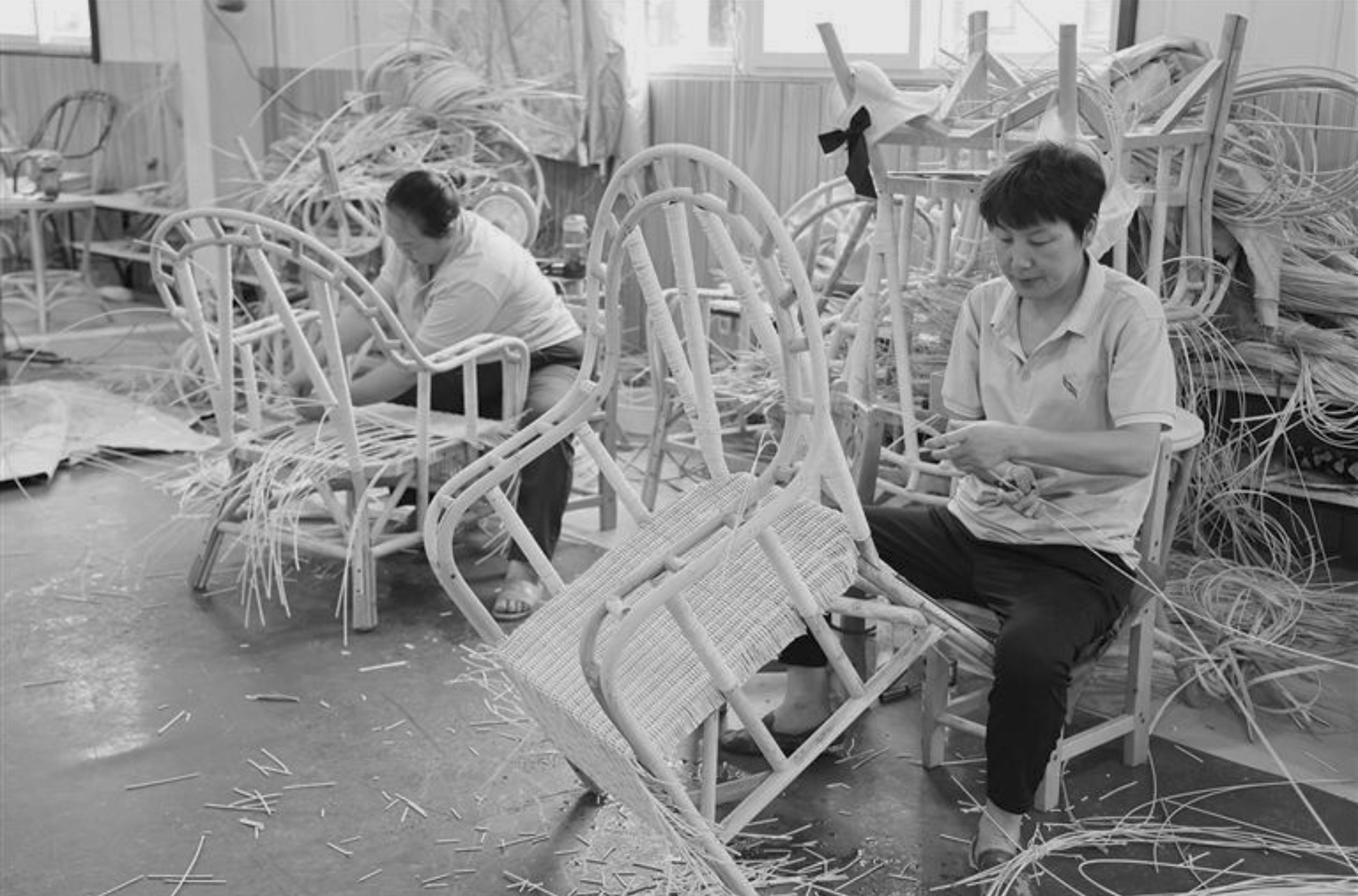
In a niche defined by craftsmanship, you must verify the supplier’s claims. Request short, unedited videos of their workers performing key tasks: rattan bending, hand-weaving, and wood finishing. This provides invaluable insight into their skill level and working conditions. A supplier who is proud of their craft will be happy to share this.
Criterion 3: Ethical & Sustainable Sourcing Credentials
The target demographic for Boho furniture is highly attuned to issues of sustainability and ethical production. This makes your supplier’s credentials a powerful marketing tool.
- Wood: Demand to see their FSC (Forest Stewardship Council) Chain of Custody (CoC) certificate. You can verify this independently on the FSC Public Certificate Search.
- Labor: While harder to verify, inquire about their labor practices and if they have undergone any social compliance audits like BSCI (Business Social Compliance Initiative).
Quality Control: Preserving Authenticity at Scale
The greatest challenge in sourcing wholesale boho furniture is maintaining a consistent quality standard that honors the “handmade” aesthetic without succumbing to “handmade” defects. This requires a QC process that is both rigorous and nuanced.
The “Golden Sample” as a Legal Document
The approved pre-production sample is the most important tool in your arsenal. It must be treated as a legal standard. It should be signed, dated, and photographed from all angles. One sample should remain with the factory, and one should be sent to you or your third-party inspection team. During the final inspection, every product coming off the line is compared directly against this “Golden Sample.”
A Specialized QC Checklist for Boho Furniture
Your inspection checklist must go beyond standard furniture checks:
- Moisture Content Test: Use a digital moisture meter on a random selection of wood and rattan frames. A reading above 12% is a red flag for potential future warping or cracking.
- Weaving Tension & Finish: Pull firmly on wicker weaves. They should be taut with no movement. Run a hand over the surface; there should be no sharp, protruding ends.
- Symmetry & Form: For items like peacock chairs, measure key dimensions to ensure symmetry. The handcrafted nature allows for minor variations, but the core structure must be consistent.
- Finish & Odor Test: Natural and distressed finishes should be visually consistent with the Golden Sample. There should be no strong chemical or solvent smells, which indicate improper curing of lacquers or finishes.
- Stability Test: Place every item on a perfectly flat surface. There should be no wobble.

Frequently Asked Questions (FAQ)
- What is the main difference between rattan and wicker furniture?
Rattan is the raw material, a natural vine. Wicker is the weaving technique. You can have wicker furniture wholesale made from rattan, but also from bamboo, seagrass, or even synthetic materials. For authentic Boho design, rattan is the preferred material.
- How do I ensure rattan furniture won’t crack when sold in a dry climate like Arizona or Nevada?
The key is ensuring the raw rattan was properly cured and has the correct moisture content before it was sealed and finished. This is a critical point to verify during the supplier vetting and QC process. A quality rattan furniture supplier will understand the requirements for different export markets.
- What are the typical MOQs for custom boho furniture?
Because of the skilled labor involved, MOQs are often lower than for mass-produced items. For chairs or small tables, expect MOQs of 50-100 pieces per design. For larger items like cabinets, it can be as low as 10-20 pieces.
- Is it possible to source ethically-made boho furniture from China?
Yes, absolutely. The key is to partner with a sourcing agent who can conduct on-the-ground due diligence. By focusing on specialist, family-owned workshops and demanding transparency (like FSC or BSCI audits), it is possible to build an ethical and sustainable supply chain for natural material furniture.
Read More from Our Niche-Specific Sourcing Guides
From Mood Board to Market: Your Sourcing Partner
Sourcing authentic wholesale boho furniture is a blend of art and science. It requires a partner who not only understands the aesthetic but also masters the technical complexities of working with natural materials. At ChinaSourcing.co, we provide that expertise. We connect you with true artisans, conduct rigorous material and quality audits, and manage the entire process, ensuring the products that arrive are a true reflection of your brand’s vision.
Ready to build an authentic and profitable Boho collection?
Contact Our Sourcing Experts for a Free Consultation Today!
Please subscribe to see the detail
Free Resources Right Here
Enter your email to gain full access to our resources
Get exclusive access from expert insights to streamline your supply chain.
Free Resources
Explore More Relative Resources

Example Category
The 2026 consumer goods pivot: Why your China strategy needs an upgrade
We have entered a new era for consumer goods in China. The latest "Horizon Scanning" reports for 2026 confirm that the market has moved beyond simpl...

19/03/2026

3 min read

Example Category
The post-October reality: Why export compliance is the new standard in 2026 China sourcing
We are now several months into the enforcement of China’s sweeping export compliance overhaul. For global procurement leaders, the transition from "...
03/03/2026
3 min read

Example Category
The Hidden Risk of 0.2% China Inflation Rate: Why "Cheap China" might be costing you more
The latest data shows China’s CPI rose by a mere 0.2% in October. While many procurement teams see stagnant inflation as a sign that prices will sta...
26/02/2026
3 min read
Contact Us Right Today
Ready to work with a sourcing team that’s built for real-world results?
From first quote to final delivery, China Sourcing Co helps you simplify sourcing, reduce risks, and scale with confidence.